
Client Name:
Sam Sample
E-mail:
testing@naturalability.com.au
Report Type:
Student Career


PERSONAL BLUEPRINT FOR - Sam Sample

LOW
MED
HIGH
SCORE
PERSONAL STYLE - NATURE - CORE IDENTITY
TIME FRAME ORIENTATION
PROBLEM SOLVING
IDEA GENERATION
SPATIAL ABILITIES - PEOPLE OR THINGS
SPECIALIZED ABILITIES - LEARNING CHANNELS
Page-2
Natural Ability Explorer
Ability Patterns:Manage The Fit Between You And Your Work

Ability Patterns describe how your abilities interact. They reveal your natural approach to completing roles and responsibilities and are not tied to a single occupation.

Rather than considering one ability at a time, think of your Patterns as a way to customize or manage the fit between you and your work. By discovering your Patterns, you can modify or enhance your current job, change roles within your career field, and identify similar roles in new fields.

Over time, many satisfied (and dissatisfied) workers look for ways to emphasize and deemphasize particular aspects of their employment. Understanding your Patterns equips you with solid evidence for the changes you might want to make -putting you in the driver’s seat of your career.
 Your profile has been compared to over 60 Patterns. The matches with your profile are listed in descending rank order in the table below.
Click on each Pattern to see a:
Your profile has been compared to over 60 Patterns. The matches with your profile are listed in descending rank order in the table below.
Click on each Pattern to see a:
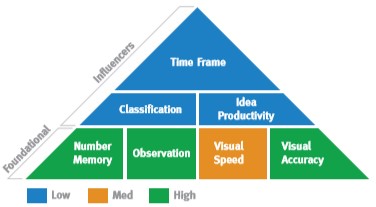 Visual Formula of this Pattern.
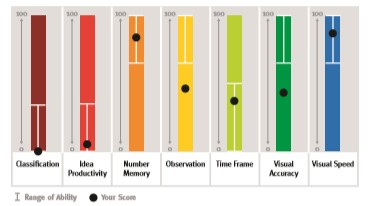 Score Graph of your ability scores relative to the Pattern.
 Ability Patterns - Connections to Abilities
 Very Clear Connection to Abilities
 Click Each Pattern Online for Full Description
Page-3
Natural Ability ExplorerPlanning - Hands-on
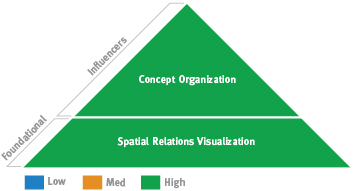
Abilities Constituting This Pattern
This pattern utilizes Analytical Problem Solving (Concept Organization) within the structural world. Spatial Relations Visualization is at the foundation of this pattern and is the first ability to take into account. Strength in this ability means greater satisfaction when involved in and with the three dimensional world. You will experience more satisfaction in any activity, whether as an avocation or as part of your work, that has a `hands on' feel to it, and brings you in contact with the real world.
With strong Concept Organization, people with this pattern are able to solve problems most easily by projecting logical consequences into the future. This ability also enables them to communicate ideas to other people in a way that they can easily understand. People with this particular combination of abilities often enjoy functioning in a planning role. They are able to deal with problems in a rigorous, logical and linear manner that lends itself easily to projections and forecasting the future.
With strong Concept Organization, people with this pattern are able to solve problems most easily by projecting logical consequences into the future. This ability also enables them to communicate ideas to other people in a way that they can easily understand. People with this particular combination of abilities often enjoy functioning in a planning role. They are able to deal with problems in a rigorous, logical and linear manner that lends itself easily to projections and forecasting the future.
100

0

•

Concept Organization
100
0

•
Spatial Relations Visualization

Your Scores (black dots) Relative To Required Ability Range
With your combination of strong abilities, you will in all likelihood be most satisfied and happy when you are using them regularly. This combination of driving abilities is seen quite often in work roles requiring the anticipation of consequences int he 3-D world. Responsibilities can include planning, communicating/explaining, analyzing, and creating processes. Use your knowledge of your personal style such as your Generalist/Specialist and Extrovert/Introvert nature to guide you to your specific work roles.
See next page for CAREERS TO EXPLORE.
Page-4
Natural Ability ExplorerCareers to Explore for Planning - Hands-on
Organized by Job Families which are groups of occupations based upon work performed, skills, education, training and credentials.Page-5
Natural Ability ExplorerSpecializing - Hands-on
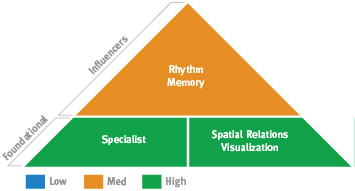
Abilities Constituting This Pattern
The combination of physical activity (Rhythm Memory), working with tangible items or concrete facts (Spatial Relations Visualization) and the personal style of a Specialist points to the basic pattern of Specializing- Hands-on. People with this pattern find outlets on and off the job and can include leisure activities such as cooking, baking, or working on cars. When Spatial Relations Visualization is very strong, it almost always points to a career or work role that involves some hands-on activities as part of your daily work tasks.
People with strong Spatial Relations Visualization also tend to be more concrete thinkers, meaning they like things that have a tangible or finished product outcome. Typically, people with this pattern are more comfortable in fields that are supported by facts and figures or black or white outcomes versus theories and ideas that have no verifiable outcome or basis. Because of this, many are drawn to technical, mechanical, scientific, medical, or sometimes artistic fields.
People with strong Spatial Relations Visualization also tend to be more concrete thinkers, meaning they like things that have a tangible or finished product outcome. Typically, people with this pattern are more comfortable in fields that are supported by facts and figures or black or white outcomes versus theories and ideas that have no verifiable outcome or basis. Because of this, many are drawn to technical, mechanical, scientific, medical, or sometimes artistic fields.
100
0
•
Specialist
100
0
•
Rhythm Memory
100
0

•
Spatial Relations Visualization
Your Scores (black dots) Relative To Required Ability Range
The Specialist orientation often points to choosing a narrower or specialized field where a natural drive will lead to a depth of knowledge. This specialization will most likely make you more proficient and possibly an expert. Your interest and education will be very important in deciding which industry you work in but the key is to look for activities that involve hands on and tangible outcomes.
If you have a Pragmatic Problem Solving style (lower Classification and Concept Organization) and lower classic learning channels (Verbal Memory and Tonal Memory) you can leverage your Specializing- Hands-on pattern by pursuing careers that rely heavily on internships or apprenticeship programs. If you have stronger Classification or Concept Organization and stronger learning channels, a career that includes a college degree may be more to your liking. Whichever route you choose, staying in a career path that includes working with your hands will bring the most satisfaction.
If you have a Pragmatic Problem Solving style (lower Classification and Concept Organization) and lower classic learning channels (Verbal Memory and Tonal Memory) you can leverage your Specializing- Hands-on pattern by pursuing careers that rely heavily on internships or apprenticeship programs. If you have stronger Classification or Concept Organization and stronger learning channels, a career that includes a college degree may be more to your liking. Whichever route you choose, staying in a career path that includes working with your hands will bring the most satisfaction.
See next page for CAREERS TO EXPLORE.
Page-6
Natural Ability ExplorerCareers to Explore for Specializing - Hands-on
Organized by Job Families which are groups of occupations based upon work performed, skills, education, training and credentials.Page-7
Natural Ability ExplorerTroubleshooting - Hands-on
Abilities Constituting This Pattern
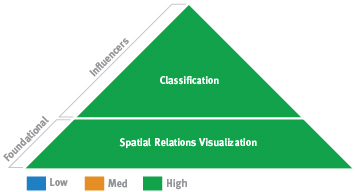
This pattern utilizes Diagnostic Problem Solving (Classification) within the structural world. Spatial Relations Visualization is at the foundation of this pattern and is the first ability to take into account. Strength in this ability means greater satisfaction when involved in and with the three dimensional world. You will experience more satisfaction in any activity, whether as an avocation or as part of your work, that has a `hands on' feel to it, and brings you in contact with the real world.
Classification drives people with this pattern to solve problems quickly and well; communicating rationales or ideas to other people may present more of a problem. They often enjoy functioning in a problem solving, or troubleshooting role and thrive on having different types of problems to work on. People with this pattern often `see' the answer much more quickly than others, and can feel impatient at times unless they consciously make allowances for other people's problem solving styles. With your combination of strong abilities, you will in all likelihood be most satisfied and happy when you are using them regularly.
Classification drives people with this pattern to solve problems quickly and well; communicating rationales or ideas to other people may present more of a problem. They often enjoy functioning in a problem solving, or troubleshooting role and thrive on having different types of problems to work on. People with this pattern often `see' the answer much more quickly than others, and can feel impatient at times unless they consciously make allowances for other people's problem solving styles. With your combination of strong abilities, you will in all likelihood be most satisfied and happy when you are using them regularly.
100
0
•
Classification
100
0
•
Spatial Relations Visualization
Your Scores (black dots) Relative To Required Ability Range
This combination of driving abilities is seen quite often in people who operate in environments that require on-the-spot decisions, and a sense of certainty. People who are involved in direct, hands-on problem solving, and technicians who do frequent troubleshooting all use this pattern of abilities. In addition, it is often seen in people who must come into a troubled situation and 'take over' for a time.
See next page for CAREERS TO EXPLORE.
Page-8
Natural Ability ExplorerCareers to Explore for Troubleshooting - Hands-on
Organized by Job Families which are groups of occupations based upon work performed, skills, education, training and credentials.Page-9
Natural Ability ExplorerProblem Solving - Hands-on Consultative
Abilities Constituting This Pattern
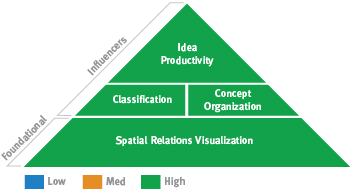
This pattern combines the Consultative Problem Solving abilities (Classification and Concept Organization) and a rich flow of ideas (Idea Productivity) within the structural world (Spatial Relations Visualization). The combination of several strong driving abilities means that people with this pattern have very powerful abilities in many diverse areas of functioning. A potential problem with this is that it is nearly impossible for any one job to use all of these talents. It is generally true that we experience dissatisfaction on the job, not because of abilities we do not have, but because of abilities we do have that we are not using. The wide variety of strong abilities in this pattern suggests the need to seek outlets off the job as well as on. Think of your career in terms of expansion. At any given step, think of how you can use the experience and expertise you are gaining now to move to a wider area of influence. You may wish to develop one or more themes to your career, so that when you move from one area to another, you move along a related path of jobs or careers.
Spatial Relations Visualization is at the foundation of this pattern and is the first ability to take into account. Strength in this ability means greater satisfaction when involved in and with the three dimensional world. You will experience more satisfaction in any activity, whether as an avocation or as part of your work, that has a `hands on' feel to it, and brings you in contact with the real world.
Spatial Relations Visualization is at the foundation of this pattern and is the first ability to take into account. Strength in this ability means greater satisfaction when involved in and with the three dimensional world. You will experience more satisfaction in any activity, whether as an avocation or as part of your work, that has a `hands on' feel to it, and brings you in contact with the real world.
100
0
•
Classification
100
0
•
Concept Organization
100
0
•
Idea Productivity
100
0

•
Spatial Relations Visualization
Your Scores (black dots) Relative To Required Ability Range
With strong Classification and Concept Organization, you are able to solve problems quickly and well, and can communicate your ideas to other people in a way that they can easily understand. People with this particular combination of abilities often enjoy functioning in a consultative role. They are able to deal with problems quickly and help others understand the solution. They can combine more rapid non logical problem solving with more rigorous, logical and linear problem solving.
Idea Productivity can help with problem solving, since it allows you to come up with many possibilities, and also with communicating, since you are more easily able to think of different ways to express your ideas so that people will understand them. This can help in situations in which you are teaching or convincing others of the rightness of your ideas.
Idea Productivity can help with problem solving, since it allows you to come up with many possibilities, and also with communicating, since you are more easily able to think of different ways to express your ideas so that people will understand them. This can help in situations in which you are teaching or convincing others of the rightness of your ideas.
See next page for CAREERS TO EXPLORE.
Page-10
Natural Ability ExplorerCareers to Explore for Problem Solving - Hands-on Consultative
Organized by Job Families which are groups of occupations based upon work performed, skills, education, training and credentials.Page-11
Natural Ability ExplorerCreating - Visual Technical
Abilities Constituting This Pattern
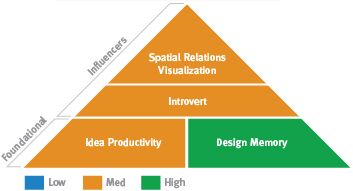
This pattern combines an Introverted personal style with idea-rich eye for design (Idea Productivity, Design Memory) that results in an end product (Spatial Relations Visualization). People with this pattern will most likely enjoy working with or in an industry that involves a more visual creative environment. Design Memory and Idea Productivity anchor this profile as a constant flow of new ideas can help stimulate new ways to adjust, correct, or refine a visual concept. Creative industries are always looking for something new, fresh, and original, and in this environment your Idea Productivity will be rewarded.
100
0
•
Design Memory
100
0
•
Idea Productivity
100
0
•
Introvert
100
0
•
Spatial Relations Visualization
Your Scores (black dots) Relative To Required Ability Range
This role does not always entail physically creating art or confining talents to just physical art. The strong visual abilities relate to anything visual including photography, digital art, maps, designs, technical graphics, publishing layout and design, or even an editorial or creative directing role. People with this pattern probably feel a pull toward visual graphics and may have even experimented in this area in school. Keep investigating possibilities, because new jobs and career paths are being created every day.
If you are more of an Introvert, your natural inclination may be to work on your own or in an environment that does not require a lot of people interaction. Fortunately there are many roles in creative industries that allow for independent or autonomous work styles. People can work virtually from their own space while still having access to the world.
If you are more of an Introvert, your natural inclination may be to work on your own or in an environment that does not require a lot of people interaction. Fortunately there are many roles in creative industries that allow for independent or autonomous work styles. People can work virtually from their own space while still having access to the world.
See next page for CAREERS TO EXPLORE.
Page-12
Natural Ability ExplorerCareers to Explore for Creating - Visual Technical
Organized by Job Families which are groups of occupations based upon work performed, skills, education, training and credentials.Page-13
Natural Ability ExplorerProblem Solving - Hands-on Diagnostic
Abilities Constituting This Pattern
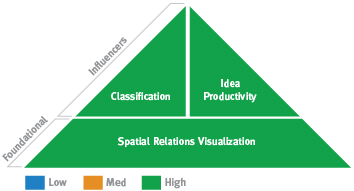
This pattern combines Diagnostic Problem Solving (Classification) and a rich flow of ideas (Idea Productivity) within the structural world (Spatial Relations Visualization). The combination of several strong driving abilities means that people with this pattern have very powerful abilities in many diverse areas of functioning. A potential problem with this is that it is nearly impossible for any one job to use all of these talents. It is generally true that we experience dissatisfaction on the job, not because of abilities we do not have, but because of abilities we do have that we are not using. The wide variety of strong abilities in this pattern suggests the need to seek outlets off the job as well as on. Think of your career in terms of expansion. At any given step, think of how you can use the experience and expertise you are gaining now to move to a wider area of influence. You may wish to develop one or more themes to your career, so that when you move from one area to another, you move along a related path of jobs or careers.
Spatial Relations Visualization is at the foundation of this pattern and is the first ability to take into account. Strength in this ability means greater satisfaction when involved in and with the three dimensional world. You will experience more satisfaction in any activity, whether as an avocation or as part of your work, that has a `hands on' feel to it, and brings you in contact with the real world.
Spatial Relations Visualization is at the foundation of this pattern and is the first ability to take into account. Strength in this ability means greater satisfaction when involved in and with the three dimensional world. You will experience more satisfaction in any activity, whether as an avocation or as part of your work, that has a `hands on' feel to it, and brings you in contact with the real world.
100
0
•
Classification
100
0
•
Idea Productivity
100
0
•
Spatial Relations Visualization
Your Scores (black dots) Relative To Required Ability Range
Classification drives people with this pattern to solve problems quickly and well; communicating rationales or ideas to other people may present more of a problem. They often enjoy functioning in a problem solving, or troubleshooting role and thrive on having different types of problems to work on. People with this pattern often `see' the answer much more quickly than others, and can feel impatient at times unless they consciously make allowances for other people's problem solving styles.
Strong Idea Productivity can help with problem solving since it allows you to come up with many possibilities. This can help in situations in which there is a premium on the speed of resolution rather than on explaining. Your Idea Productivity can also drive you to seek variety in your work.
Strong Idea Productivity can help with problem solving since it allows you to come up with many possibilities. This can help in situations in which there is a premium on the speed of resolution rather than on explaining. Your Idea Productivity can also drive you to seek variety in your work.
See next page for CAREERS TO EXPLORE.
Page-14
Natural Ability ExplorerCareers to Explore for Problem Solving - Hands-on Diagnostic
Organized by Job Families which are groups of occupations based upon work performed, skills, education, training and credentials.Page-15
Natural Ability ExplorerCreating - Culinary Arts
Abilities Constituting This Pattern
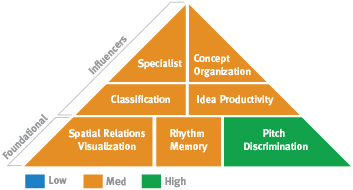
This pattern combines a Specialist orientation with hands-on, physical abilities (Spatial Relations Visualization, Rhythm Memory), idea-rich, relatively strong Problem Solving abilities (Idea Productivity, Classification, Concept Organization), and strong sensory sensitivities (Pitch Discrimination). The natural abilities that come together to form the Culinary Arts pattern are specialized physical, sensory and problem solving abilities. Pitch Discrimination reflects sensitivity across all senses, so the higher the pitch the greater the capacity to distinguish different flavors, smells, feel textures, see variants of colors, and be affected by sounds that might not register at all with a person lower on the Pitch scale. Even the very fine knife-work used in high-end food preparation and design is enhanced by this pattern of abilities. People with this pattern are driven to create an end "product" and must use physical energy as well as creativity to achieve it.
Several other abilities come into play to complete the profile. Running a kitchen is a very fast paced environment with minute-by-minute changes and challenges, which translates to the need for relatively quick problem solving abilities. A certain level of Classification and Concept Organization are suitable to thrive in this environment, as they are perfect problem solving abilities in a fast-paced and chaotic workplace. Concept Organization is also very helpful in the planning of menus, pricing, and ordering supplies.
Several other abilities come into play to complete the profile. Running a kitchen is a very fast paced environment with minute-by-minute changes and challenges, which translates to the need for relatively quick problem solving abilities. A certain level of Classification and Concept Organization are suitable to thrive in this environment, as they are perfect problem solving abilities in a fast-paced and chaotic workplace. Concept Organization is also very helpful in the planning of menus, pricing, and ordering supplies.
100
0
•
Classification
100
0
•
Concept Organization
100
0
•
Specialist
100
0
•
Idea Productivity
100
0

•
Pitch Discrimination
100
0

•
Rhythm Memory
100
0

•
Spatial Relations Visualization
Your Scores (black dots) Relative To Required Ability Range
Often on their feet, those in culinary arts typically move for a large part of the day, so Rhythm Memory can provide fuel to cope with the physical demands of the job. Raw creativity is also a big part of the Culinary Arts pattern, so Idea Productivity will help in stretching you to achieving new and more dynamic creations.
Don't forget, Spatial Relations Visualization is also critical for this profile, as you will be very "hands on" and the final result will be a very physical and tangible creation. Your Specialist orientation is helpful in the drive for excellence, and to be the very best at what you do. This drive is necessary to reach the heights of "Executive Chef".
If you have particularly strong Concept Organization and strong Classification you may also want to consider being a Food & Wine Writer or Critic, a Leisure & Lifestyle Writer, or Travel & Leisure Writer. Concept Organization is the key planning and writing ability and Classification enables you to critique results. Pitch Discrimination provides the unique ability to distinguish between good and excellent, and to describe sensations that may be unrecognizable to a person with lower abilities in these areas.
Don't forget, Spatial Relations Visualization is also critical for this profile, as you will be very "hands on" and the final result will be a very physical and tangible creation. Your Specialist orientation is helpful in the drive for excellence, and to be the very best at what you do. This drive is necessary to reach the heights of "Executive Chef".
If you have particularly strong Concept Organization and strong Classification you may also want to consider being a Food & Wine Writer or Critic, a Leisure & Lifestyle Writer, or Travel & Leisure Writer. Concept Organization is the key planning and writing ability and Classification enables you to critique results. Pitch Discrimination provides the unique ability to distinguish between good and excellent, and to describe sensations that may be unrecognizable to a person with lower abilities in these areas.
See next page for CAREERS TO EXPLORE.
Page-16
Natural Ability ExplorerCareers to Explore for Creating - Culinary Arts
Organized by Job Families which are groups of occupations based upon work performed, skills, education, training and credentials.Food Preparation and Serving RelatedChef Food Prep SupervisorHealthcare Practitioners and TechnicalDieticianLife, Physical, and Social ScienceFood Scientists & Technologists |
Page-17
Natural Ability ExplorerSpecializing - Structural Consultative Problem Solving
Abilities Constituting This Pattern
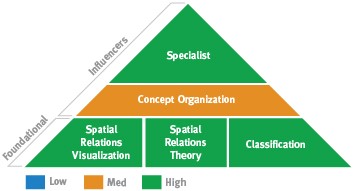
This pattern combines a Specialist orientation, a Consultative Problem Solving style (Classification and Concept Organization) and the ability to engineer or design in three dimensions (Spatial Relations Theory and Visualization). With a natural consultative problem solving style, people with this pattern are typically drawn to work roles requiring fast-paced troubleshooting or solution identification within structural industries. You might want to begin your career on the design or implementation team in a structural design or engineering firm. This will give you the necessary experience to be seen as the expert you desire to be. Seeking to remain in the structural, tangible world and not allowing yourself to be thrust into a more theoretical managerial position will be important for your development. Because of your Specialist orientation you would be more successful as a consultant rather than a long-term manager, allowing you to advise from outside the ranks. However, if you are an Extrovert, the energy you gain from working with people might compensate for your Specialist orientation on a team and you would naturally be seen as a leader.
100
0
•
Classification
100
0
•
Concept Organization
100
0
•
Specialist
100
0
•
Spatial Relations Theory
100
0
•
Spatial Relations Visualization
Your Scores (black dots) Relative To Required Ability Range
A word of caution about Classification, the higher your score the more pressure you will feel to use it. It can also sometimes cause you to see a problem in almost any plan that is presented, making it difficult for you to make a decision. You need to discipline yourself to move on consistently from identifying problems to also coming up with possible solutions. This is more difficult, but ultimately a more complete use of your considerable talents.
A wide variety of opportunities in STEM (Science, Technology, Engineering, and Mathematics) fields are open to you; they are a strong match for your natural abilities. Seeking out information about these fields in areas of your natural interests would be beneficial to your career journey.
A wide variety of opportunities in STEM (Science, Technology, Engineering, and Mathematics) fields are open to you; they are a strong match for your natural abilities. Seeking out information about these fields in areas of your natural interests would be beneficial to your career journey.
See next page for CAREERS TO EXPLORE.
Page-18
Natural Ability ExplorerCareers to Explore for Specializing - Structural Consultative Problem Solving
Organized by Job Families which are groups of occupations based upon work performed, skills, education, training and credentials.Architecture and EngineeringAerospace Engineers Agricultural Engineer Automotive Engineers Civil Engineering Technicians Computer Hardware Engineer Electrical Engineers Electromechanical Engineer Tech. Electronics Engineering Technicians Energy Engineers Environmental Engineers Fire-Prevention Engineer Industrial Engineering Technologists |
Industrial Engineers
Manufacturing Engineer
Marine Engineer
Materials Engineer
Mechanical Engineering Tech.
Mechatronics Engineers
Microsystems Engineers
Mining & Geological Engineer
Nanosystems Engineer
Petroleum Engineers
Product Safety EngineerComputer and MathematicalComputer Systems Analyst |
Telecommunications Engineer Spec.Construction and ExtractionConstruction & Building Inspector Solar Energy Installation ManagersInstallation, Maintenance, and RepairAircraft Mechanic Automotive Master MechanicLife, Physical, and Social ScienceChemists Environmental Restoration Planner HydrologistsTransportation and Material MovingAir Traffic Controller |
Page-19
Natural Ability ExplorerTroubleshooting - Structural Diagnostic
Abilities Constituting This Pattern
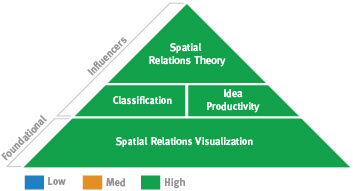
This pattern combines Diagnostic Problem Solving (Classification) and a rich flow of ideas (Idea Productivity) with the spatial abilities (Spatial Relations Visualization and Theory). The combination of several strong driving abilities means that people with this pattern have very powerful abilities in many diverse areas of functioning. A potential problem with this is that it is nearly impossible for any one job to use all of these talents. It is generally true that we experience dissatisfaction on the job, not because of abilities we do not have, but because of abilities we do have that we are not using. The wide variety of strong abilities in this pattern suggests the need to seek outlets off the job as well as on. Think of your career in terms of expansion. At any given step, think of how you can use the experience and expertise you are gaining now to move to a wider area of influence. Developing one or more themes to your career, will help you create a related path of jobs or career as you move from one area to another.
Spatial Relations Visualization is at the foundation of this pattern and is the first ability to take into account. Strength in this ability means greater satisfaction when involved in and with the three dimensional world. You will experience more satisfaction in any activity, whether as an avocation or as part of your work, that has a `hands on' feel to it, and brings you in contact with the real world.
Spatial Relations Visualization is at the foundation of this pattern and is the first ability to take into account. Strength in this ability means greater satisfaction when involved in and with the three dimensional world. You will experience more satisfaction in any activity, whether as an avocation or as part of your work, that has a `hands on' feel to it, and brings you in contact with the real world.
100
0
•
Classification
100
0
•
Idea Productivity
100
0
•
Spatial Relations Theory
100
0
•
Spatial Relations Visualization
Your Scores (black dots) Relative To Required Ability Range
Classification drives people with this pattern to solve problems quickly and well; communicating rationales or ideas to other people may present more of a problem. They often enjoy functioning in a problem solving, or troubleshooting role and thrive on having different types of problems to work on. People with this pattern often `see' the answer much more quickly than others, and can feel impatient at times unless they consciously make allowances for other people's problem solving styles.
Idea Productivity can help with problem solving, since it allows you to come up with many possibilities, and also with communicating, since you are more easily able to think of different ways to put your ideas so that people will understand them. This can help in situations in which you are teaching or convincing others of the rightness of your ideas.
Spatial Relations Theory reinforces Spatial Relations Visualization. It also allows people with this pattern to understand the interrelationships within systems and groups. You are able to enjoy thinking about the `why' as well as the `what' of a problem or situation in systems. This combination of driving abilities is seen quite often in people who operate in fast paced, high-pressure environments that require on the spot decisions, and a sense of certainty about them. Surgeons, engineers who manage large systems, and technicians who do frequent troubleshooting all use this pattern of abilities. In addition, it is often seen in test pilots, nuclear engineers, and people who must come into a troubled situation and `take over' for a time.
Idea Productivity can help with problem solving, since it allows you to come up with many possibilities, and also with communicating, since you are more easily able to think of different ways to put your ideas so that people will understand them. This can help in situations in which you are teaching or convincing others of the rightness of your ideas.
Spatial Relations Theory reinforces Spatial Relations Visualization. It also allows people with this pattern to understand the interrelationships within systems and groups. You are able to enjoy thinking about the `why' as well as the `what' of a problem or situation in systems. This combination of driving abilities is seen quite often in people who operate in fast paced, high-pressure environments that require on the spot decisions, and a sense of certainty about them. Surgeons, engineers who manage large systems, and technicians who do frequent troubleshooting all use this pattern of abilities. In addition, it is often seen in test pilots, nuclear engineers, and people who must come into a troubled situation and `take over' for a time.
See next page for CAREERS TO EXPLORE.
Page-20
Natural Ability ExplorerCareers to Explore for Troubleshooting - Structural Diagnostic
Organized by Job Families which are groups of occupations based upon work performed, skills, education, training and credentials.Page-21
Natural Ability ExplorerCommunicating
Abilities Constituting This Pattern
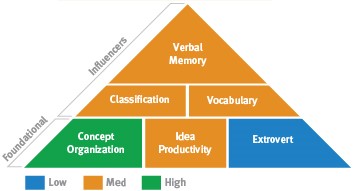
This pattern combines a low to moderate level of Extroversion with a continuous flow of ideas (Idea Productivity) and the ability to organize and communicate them in a way that is easy to follow (Concept Organization) in a relatively fast-pasted environment (moderate to strong Classification). At least a moderate ability to remember what is read (Verbal Memory) and General Vocabulary are also important. People with this pattern can quickly and easily generate a large number of ideas. They can think of a new approach to communicate a thought, if the approach they begin with is not understandable to the audience. Organizing ideas and information is a natural, internal process for people with this pattern. They excel in creating or listening for logic tracks. This ability pattern is foundational for a wide variety of careers in communications.
100
0
•
Classification
100
0
•
Concept Organization
100
0
•
Idea Productivity
100
0
•
Extrovert
100
0
•
Verbal Memory
100
0
•
Vocabulary
Your Scores (black dots) Relative To Required Ability Range
The Communicating pattern can apply to oral and written communication. The stronger your Introversion, the more comfortable you will be if you are given time to organize your thoughts before you give a speech or presentation. The stronger your Classification, the more likely you will be able to think on your feet. Your strong Concept Organization keeps you from enjoying rapid fire problem solving, but you should easily be able to follow the twists and turns of a logical argument, and form a response with ease.
Good Verbal Memory and Vocabulary should provide you with the necessary tools to communicate any thought thoroughly. You will likely be a reader who enjoys being informed of changes in the world or your industry. Keeping up with information may be one of your favorite pastimes, and in our communication rich world your innate abilities will be desirable in any industry needing creative communicators.
Good Verbal Memory and Vocabulary should provide you with the necessary tools to communicate any thought thoroughly. You will likely be a reader who enjoys being informed of changes in the world or your industry. Keeping up with information may be one of your favorite pastimes, and in our communication rich world your innate abilities will be desirable in any industry needing creative communicators.
See next page for CAREERS TO EXPLORE.
Page-22
Natural Ability Explorer